
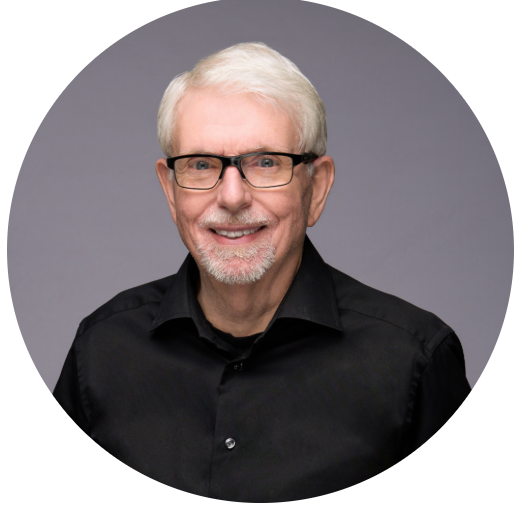
Early Life and Military Career
Jeff Sutherland began his professional career as a fighter pilot in the United States Air Force. He achieved Top Gun status in 1967 and flew 100 combat missions over North Vietnam. This military experience instilled in him a deep appreciation for precision, discipline, and high-performance teamwork under pressure—qualities that would later influence his approach to Scrum.
Academic Background
Sutherland is a graduate of the United States Military Academy. After 11 years in the Air Force, he pursued an academic career in medicine. He earned a master's degree in statistics from Stanford University and later joined the faculty at the University of Colorado Medical School, where he completed his doctoral degree in biometrics. His medical and research background exposed him to data collection methodologies and advanced IT systems, giving him unique insights into complex problem-solving.
Corporate Career and Scrum Development
Following his medical career, Sutherland joined a company operating 150 banks across North America in 1983, becoming VP Advanced Systems and General Manager of the ATM Business Unit. It was here he first encountered business processes modelled on the waterfall method and recognised their fundamental inefficiencies.
Over his career, Sutherland served as VP of Engineering, CTO, or CEO of eleven software companies. In the first four companies, he prototyped what would become Scrum. The breakthrough came in 1993 at Easel Corporation, where Sutherland, along with colleagues John Scumniotales and Jeff McKenna, developed the Scrum process.
The Birth of Scrum
The Scrum framework was influenced by a 1986 Harvard Business Review article by Hirotaka Takeuchi and Ikujiro Nonaka, which described a holistic approach to product development. The name "Scrum" was chosen in reference to the rugby formation, reflecting how cross-functional teams huddle together to create prioritised lists and work collaboratively.
In 1995, Sutherland worked with Ken Schwaber to formalise Scrum as a process at OOPSLA '95. Together, they refined and enhanced Scrum across multiple software companies and IT organisations.
The Agile Manifesto
Sutherland contributed to the creation of the Agile Manifesto in 2001, becoming one of its original signatories. This watershed moment helped establish the philosophical foundation for agile methodologies worldwide. Along with Schwaber, he authored and continues to maintain The Scrum Guide, the official definition of the Scrum framework.
Scrum Principles and Philosophy
Sutherland's vision for Scrum centres on several core principles. He identified three distinguishing factors between Scrum teams and normal teams: self-management, continuity of team membership, and dedication to a single project. He emphasised that clarification of user needs is essential, famously stating that developers should avoid coding whilst user requirements remain unclear.
Scrum involves 30-day cycles of plan, build, and monitor sprints, with teams consisting of three specific roles: the Product Owner, the Developers, and the Scrum Master. The process includes pre-sprint planning, the sprint itself, and post-sprint meetings, with daily stand-ups to maintain alignment.
Scrum Inc. and Global Impact
In 2006, Sutherland founded Scrum Inc., based in Boston, Massachusetts. Today, Scrum is used in 74% of Agile software companies in over 100 countries. The methodology has expanded far beyond software development into finance, healthcare, higher education, telecommunications, and even family dynamics.
Sutherland realised that the benefits of Scrum are not limited to software and product development, adapting this successful strategy for several other industries. His son, JJ Sutherland, now serves as CEO of Scrum Inc., whilst Jeff remains as Founder and Chairman.
Scrum@Scale and Investment Activities
Sutherland developed Scrum@Scale to address organisational agility at scale, helping large organisations coordinate multiple Scrum teams effectively. He has also been active in venture capital, serving as Senior Advisor to OpenView Venture Partners and founding Tesla Investment Holdings LLC, which co-invests with OpenView and other venture firms.
Publications and Thought Leadership
Sutherland has authored several influential books, including:
- Software in 30 Days: How Agile Managers Beat the Odds, Delight Their Customers, and Leave Competitors in the Dust (2012, co-authored with Ken Schwaber)
- Scrum: The Art of Doing Twice the Work in Half the Time (2014, co-authored with JJ Sutherland)
- A Scrum Book: The Spirit of the Game (2019, co-authored with James Coplien)
- First Principles in Scrum: Teams That Finish Early Accelerate Faster (2024)
He continues to speak at conferences worldwide, sharing best practices and insights gleaned from decades of implementing Scrum across diverse industries and organisations.
Legacy and Current Work
Now in his eighties, Jeff Sutherland remains actively involved in the Scrum community through Scrum Inc., training programmes, consulting engagements, and thought leadership. His work has fundamentally changed how millions of people work, emphasising values of collaboration over documentation, responding to change over following rigid plans, and empowering teams to self-organise and continuously improve.
His pioneering vision has established Scrum as the dominant framework in agile software development and positioned him as one of the most influential figures in modern project management and organisational development.