

Story Content
| Year | Image | Title | Excerpt |
|---|---|---|---|
| 1910 | 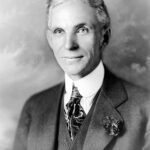 | Henry Ford | Henry Ford revolutionised manufacturing by introducing the moving assembly line at Highland Park in 1913. His focus on continuous flow, waste reduction, and standardised work laid the groundwork for lean production principles. Ford demonstrated that optimising the flow of work dramatically increases efficiency, quality, and throughput—ideas central to modern agile thinking. |
| 1924 |  | Walter Shewhart | Walter Shewhart developed statistical process control at Bell Labs, introducing control charts to distinguish between common and special cause variation. His Plan-Do-Study-Act cycle became foundational to continuous improvement methodologies. Shewhart's empirical, data-driven approach to quality directly influenced Deming and underpins the inspect-and-adapt philosophy at the heart of agile frameworks. |
| 1936 | 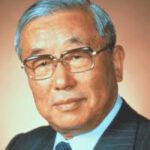 | Eiji Toyoda | Eiji Toyoda's contributions began in 1936, when he graduated with a degree in mechanical engineering and began working for his cousin Kiichiro at the family company, Toyoda Automatic Loom Works Automotive Hall of Fame. He then joined his cousin Kiichiro Toyoda in establishing Toyota Motor Company, Ltd. in 1937 |
| 1937 |  | Toyota Motor Corporation | Kiichiro Toyoda founded Toyota Motor Corporation, building upon his father Sakichi's principles of continuous improvement and respect for people. Toyota's early emphasis on eliminating waste, just-in-time production, and empowering workers to stop the line established the cultural and operational foundations that would evolve into the Toyota Production System and lean manufacturing. |
| 1943 | 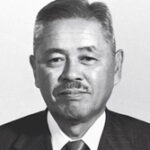 | Taiichi Ohno | Father of the Toyota Production System, which became the foundation of lean manufacturing worldwide. His innovations including just-in-time production, kanban signalling, and relentless waste elimination transformed manufacturing and profoundly influenced agile software development. His book Toyota Production System: Beyond Large-Scale Production remains essential reading for lean practitioners. |
| 1947 |  | W. Edwards Deming | W. Edwards Deming (1900–1993) was an American statistician and management consultant who revolutionised quality management. Deeply influenced by Walter Shewhart's work on statistical process control, Deming adapted Shewhart's cycle into the Plan-Do-Study-Act framework. His teachings transformed Japanese manufacturing and established foundational principles of continuous improvement, systems thinking, and variation reduction central to modern agile methodologies. |
| 1985 |  | Eli Goldratt | Eliyahu M. Goldratt (1947–2011) was an Israeli physicist, business consultant, and author who revolutionised operations management with his Theory of Constraints (TOC). His bestselling business novel The Goal introduced concepts of identifying and exploiting bottlenecks to improve throughput. His critical chain method, thinking processes, and throughput accounting profoundly influenced lean, agile, and continuous improvement methodologies worldwide. |
| 1986 |  | Ikujiro Nonaka | Japanese organisational theorist who co-authored the seminal 1986 article "The New New Product Development Game" with Hirotaka Takeuchi. His research on knowledge creation in organisations, particularly the SECI model of tacit and explicit knowledge conversion, has profoundly influenced agile thinking about team learning, collaboration, and innovation processes. |
| 1986 |  | Hirotaka Takeuchi | Japanese business professor who, alongside Ikujiro Nonaka, authored the influential 1986 Harvard Business Review article "The New New Product Development Game." This paper described a holistic, rugby-style approach to product development that directly inspired Jeff Sutherland and Ken Schwaber in creating the Scrum framework for software development. |
| 1986 | 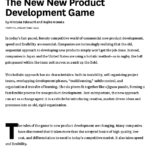 | The New New Product Development Game | "The New New Product Development Game" is a seminal 1986 Harvard Business Review article by Hirotaka Takeuchi and Ikujiro Nonaka. It introduced the rugby metaphor of teams moving together as a unit, contrasting traditional sequential relay-race approaches. The paper described six characteristics of high-performing teams and directly inspired Jeff Sutherland and Ken Schwaber in creating the Scrum framework for agile software development. |
| 1990 |  | Peter Senge | Author of The Fifth Discipline, which introduced systems thinking, mental models, shared vision, team learning, and personal mastery as five disciplines of a learning organisation. His work profoundly influences agile coaching and organisational development, encouraging teams and leaders to understand interconnections and foster environments of continuous collective learning. |
| 1990 |  | The Fifth Discipline : The Art and Practice of the Learning Organization | The Fifth Discipline: The Art and Practice of the Learning Organization* is a landmark 1990 book by Peter Senge. It introduced five essential disciplines: personal mastery, mental models, shared vision, team learning, and systems thinking — the "fifth discipline" that integrates all others. Senge argued that organisations must become learning organisations, embracing continuous adaptation and holistic thinking to thrive, profoundly influencing agile, lean, and modern management practices. |
| 1990 |  | The Machine That Changed the World | The Machine That Changed the World* is a groundbreaking 1990 book by James Womack, Daniel Jones, and Daniel Roos. Based on MIT's extensive five-year study of the global automotive industry, it coined the term "lean production" and revealed how Toyota's manufacturing system dramatically outperformed Western mass production. The book popularised lean thinking principles including waste elimination, continuous improvement, and value stream analysis, profoundly shaping modern agile and operational methodologies. |
| 2010 |  | The Scrum Guide | Lorem ipsum dolor sit amet, consectetur adipiscing elit. Morbi consequat dolor id urna luctus sodales. Pellentesque placerat mollis est, et sodales enim placerat at. Praesent libero odio, sagittis id odio. |
| 2005 |  | Jeff Sutherland | Co-creator of the Scrum framework alongside Ken Schwaber and signatory of the Agile Manifesto. Author of Scrum: The Art of Doing Twice the Work in Half the Time, he drew inspiration from lean manufacturing, fighter pilot strategy, and Japanese product development to create one of the most widely adopted agile frameworks. |
| 2005 |  | Ken Schwaber | Co-creator of the Scrum framework alongside Jeff Sutherland and signatory of the Agile Manifesto. He founded Scrum.org and developed the Professional Scrum certification programme. His work formalised Scrum's roles, events, and artefacts through the Scrum Guide, establishing the most widely used agile framework in software development worldwide. |
| 2026 |  | Dean Leffingwell | Creator of the Scaled Agile Framework (SAFe), the most widely adopted framework for scaling agile practices across large enterprises. Author of Agile Software Requirements and Scaling Software Agility, his work addresses the challenges of aligning multiple agile teams with portfolio strategy, governance, and lean product development principles. |
| 2026 |  | Mike Cohn | Author of User Stories Applied, Agile Estimating and Planning, and Succeeding with Agile, which became essential references for agile practitioners. He founded Mountain Goat Software and contributed significantly to popularising user stories, story points, and practical agile planning techniques that help teams deliver valuable software incrementally and predictably. |
| 2026 |  | Jeff Patton | Creator of the user story mapping technique and author of User Story Mapping: Discover the Whole Story, Build the Right Product. His work helps teams visualise the user journey, prioritise features effectively, and maintain shared understanding of product goals, bridging the gap between customer needs and agile delivery planning. |
| 2026 | 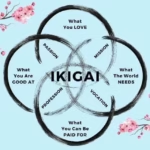 | Ikigai | Ikigai is a Japanese concept meaning "reason for being." It represents the intersection of what you love, what you're good at, what the world needs, and what you can be paid for. Finding your ikigai brings purpose, fulfilment, and motivation — a sense that life has meaning and direction each day. |