
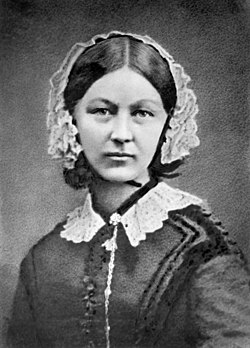
Florence Nightingale (1820–1910) was a pioneering British nurse, statistician, and social reformer who transformed modern healthcare.
Early life and calling: Born into a wealthy British family in Florence, Italy, she felt called to nursing despite her family's objections — nursing was considered a lowly profession at the time. She pursued training in Germany and France.
The Crimean War: She rose to fame during the Crimean War (1854–1856), when she led a team of nurses to care for wounded British soldiers at the military hospital in Scutari (modern-day Istanbul). She found appalling, unsanitary conditions and worked tirelessly to improve hygiene, nutrition, and care. Her nightly rounds checking on patients earned her the nickname "The Lady with the Lamp."
Statistical innovation: Nightingale was also a gifted statistician. She developed innovative data visualisations — most notably her "polar area diagram" (sometimes called the "coxcomb chart") — to demonstrate that most soldiers were dying from preventable diseases rather than battle wounds. Her evidence-based approach helped convince government officials to reform military and civilian hospitals.
Lasting legacy: After the war, she founded the Nightingale Training School at St Thomas' Hospital in London in 1860, professionalising nursing as a respected career. She also influenced public health policy, sanitation reform, and hospital design. Despite being largely bedridden for much of her later life, she continued writing and advocating for healthcare reform until her death at age 90.
International Nurses Day is celebrated on her birthday, 12 May, in her honour.