
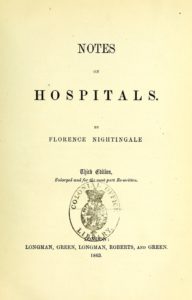
Notes on Nursing: What It Is, and What It Is Not was Florence Nightingale's most famous written work, first published in 1859.
Purpose and audience: The book was originally written not as a professional textbook but as a guide for everyday women caring for family members at home. Nightingale wanted to demystify basic principles of good health and patient care, making them accessible to the general public.
Key themes: The book emphasised practical, common-sense approaches to caring for the sick. Central ideas included the importance of fresh air and ventilation, cleanliness, proper nutrition, adequate light (especially sunlight), and reducing unnecessary noise around patients. Nightingale argued that many illnesses were worsened or even caused by poor environmental conditions rather than being inevitable.
Nursing philosophy: She drew a clear distinction between nursing and medicine. In her view, nursing was not simply about administering drugs or treatments but about creating the optimal conditions for nature to heal the patient. She stressed observation as a critical skill — nurses needed to watch patients carefully and notice subtle changes in their condition.
Impact: The book was hugely popular and widely read. It went through multiple editions and was translated into several languages. It helped shape public attitudes towards hygiene and sanitation during the Victorian era and laid intellectual groundwork for nursing as a professional discipline.
Broader significance: Beyond its practical advice, the book is considered an early and influential text in public health, preventive medicine, and evidence-based care. Many of its core principles — proper ventilation, sanitation, patient observation — remain foundational to nursing practice today.