
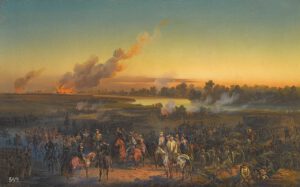
The Crimean War was fought primarily on the Crimean Peninsula, pitting an alliance of Britain, France, the Ottoman Empire, and Sardinia against the Russian Empire. The conflict arose largely from disputes over the rights of Christian minorities in the Holy Land and, more broadly, from concerns about Russian expansionism and the declining power of the Ottoman Empire — the so-called "Eastern Question."
The war is remembered for its extraordinary mismanagement and the appalling conditions endured by soldiers. Major engagements included the Battle of Alma, the Siege of Sevastopol (which lasted nearly a year), the Battle of Balaclava (famous for the ill-fated Charge of the Light Brigade), and the Battle of Inkerman. Disease — particularly cholera, typhus, and dysentery — killed far more soldiers than combat did. Poor logistics, inadequate medical provision, and chaotic military leadership defined much of the campaign.
It was also one of the first wars to be covered extensively by newspaper correspondents, most notably William Howard Russell of The Times, whose dispatches shocked the British public and put immense pressure on the government to improve conditions.
The war ended with the Treaty of Paris in 1856, which temporarily curbed Russian influence in the region.
Florence Nightingale (1820–1910)
Florence Nightingale is widely regarded as the founder of modern nursing. Born into a wealthy English family, she felt a calling to nursing despite her family's strong objections — at the time, nursing was considered a lowly, disreputable occupation.
Her Role in the Crimean War
In 1854, following public outrage over reports of horrific conditions in British military hospitals, the Secretary of War, Sidney Herbert, asked Nightingale to lead a team of 38 nurses to the Barrack Hospital at Scutari (modern-day Üsküdar, Istanbul). What she found was devastating: overcrowded wards, filthy conditions, contaminated water, blocked sewers, and a chronic lack of basic supplies. More soldiers were dying from infection and disease than from their wounds.
Nightingale imposed rigorous hygiene standards, improved sanitation, organised proper nutrition, and ensured wards were cleaned and ventilated. Mortality rates dropped dramatically. She became known as "The Lady with the Lamp" for her habit of making rounds at night to check on patients.
Her Lasting Legacy
Nightingale's impact went far beyond bedside care. She was a pioneering statistician who used innovative data visualisation — most famously her "coxcomb" (polar area) diagrams — to demonstrate that preventable diseases were the primary cause of death in the military hospitals. Her evidence-based approach persuaded the government to undertake major sanitary reforms.
After the war, she founded the Nightingale Training School at St Thomas' Hospital in London in 1860, establishing nursing as a respected profession with formal education. Her book, Notes on Nursing (1859), became a foundational text. She continued to influence public health policy, hospital design, and military medicine for decades, despite being largely bedridden for much of her later life.
She remains one of the most influential figures in the history of healthcare.